Best Pulse Oximeter for Sleep: EMAY SleepO2 Leads

Six oximeters compared for overnight use, from the 20 g recording EMAY SleepO2 to entry fingertip clips. Which one records all night, and which only reads a moment?

By Hannah PooleUpdated 16 min read
On this page
- The recording gap that decides this whole category
- Best pulse oximeter for sleep at a glance
- How I ranked six oximeters on the specs that matter overnight
- 1. EMAY SleepO2 Wrist Pulse Oximeter with Recording — Best overall
- 2. EMAY Sleep Oxygen Monitor with Built-in Recording — Best for families
- 3. Wellue Bluetooth Pulse Oximeter Fingertip — Best upgrade
- 4. Innovo Deluxe iP900AP Fingertip Pulse Oximeter — Best warranty
- 5. Zacurate 500 Series Fingertip Pulse Oximeter — Most versatile
- 6. HealthTree Fingertip Pulse Oximeter — Best budget pick
- Does a fingertip clip work while you sleep?
- What comes in the box across these six
- When a different pick wins
- The verdict
- FAQ
The best pulse oximeter for sleep is the EMAY SleepO2, because it records SpO2 and pulse rate all night in a 20 g body without a phone nearby. Most fingertip clips buyers reach for only show a live number and forget it the moment you pull your finger out. That difference, live reading versus stored overnight recording, is what actually splits this field. If you want a phone-connected clip with an out-of-range beep instead, the Wellue PC-60FW is the pick.
The recording gap that decides this whole category
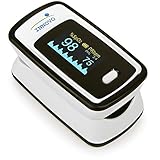
Here is the thing most buyers miss. A fingertip clip and an overnight recorder look almost identical in a photo. They do completely different jobs.
A clip shows a live number. You put your finger in, wait a few seconds, read the screen. Pull your finger out and the reading is gone. That is fine for a spot check. It is useless once you are asleep, because nobody watches a screen at 3 a.m.
An overnight recorder stores every reading on the device itself. The EMAY SleepO2 and the EMAY EMO-80 do this. You wear them, they log SpO2 and pulse rate through the night, and you review the data later.
So the real deciding question is short:
- Do you want a number now? Buy a clip.
- Do you want a night of data? Buy a recorder.
Two of these six record. Four do not. That single fact reorders the whole list, and it is why the best pulse oximeter for sleep is a recorder, not the top-selling clip. A word on the keyword itself: "sleep" here is a use case, not a certified feature. None of these six is a diagnostic sleep device, and the EMO-80 listing states it is for sports and aviation use only. Treat any overnight data as a personal log, not a medical result.
Best pulse oximeter for sleep at a glance
| Pick | Records overnight? | Weight | Price |
|---|---|---|---|
Best overall EMAY SleepO2 Wrist Pulse Oximeter |
Yes, on-device | 20 g | Check Price |
Best for families EMAY Sleep Oxygen Monitor |
Yes, 40 hr memory | 10 g | Check Price |
Best upgrade Wellue Bluetooth Pulse Oximeter |
No, 12 records + app | Clip | Check Price |
Best warranty Innovo Deluxe iP900AP |
No, live only | Clip | Check Price |
Most versatile Zacurate 500 Series |
No, live only | 3.2 oz | Check Price |
Best budget pick HealthTree Fingertip Oximeter |
No, live only | Clip | Check Price |




How I ranked six oximeters on the specs that matter overnight
Three things got a pick cut down the list, and I want you to see them before the reviews.
First cut: no overnight recording. If a device cannot store readings while you sleep, it cannot be the best pulse oximeter for sleep. That instantly pushed all four clips below the two EMAY recorders, regardless of anything else on the listing.
Second cut: no way to review the data. A stored reading you cannot get out of the device is worthless. The two EMAY units both offer a free app to review data second by second and export a report. The Wellue clip also syncs to an app, which is why it ranks highest among the non-recorders.
Third cut: bulk and weight on the finger. You have to wear this thing for hours. The SleepO2 weighs 20 g and the EMO-80 just 10 g, with an ultra-soft finger probe EMAY says is built for sleep. A boxy clip like the Wellue, measuring 1.57 x 3.74 x 2.95 in, is not designed to be worn asleep.
After those three cuts, the order fell out cleanly:
- Records, has an app, purpose-built for sleep, most current model.
- Records, has an app, lightest at 10 g, but labelled sports and aviation only.
- Syncs to an app and beeps out of range, but does not record all night.
- Best documented clip, with alarm and plethysmograph.
- Reliable all-rounder clip with the full accessory kit.
- Cheapest working clip in the set.
Every product here lists only a single seller, so there is no bundle confusion to untangle. What separates them is what they do overnight, not who stocks them.
1. EMAY SleepO2 Wrist Pulse Oximeter with Recording — Best overall
The SleepO2 is the only pick here built from the ground up to log a full night of oxygen data with nothing else in the room.
Best for: anyone who wants a full night of oxygen data without a phone tethered nearby Skip it if: you only want a quick daytime reading
What sets the SleepO2 apart in this set is that the recording lives on the device. EMAY says the built-in storage logs SpO2 and pulse rate continuously through the night without a smartphone. That matters. A phone-tethered monitor can drop its connection at 2 a.m. and lose the very hours you cared about.
The design leans into sleep. It weighs 20 g and pairs the wrist unit with what EMAY calls an ultra-soft patented finger probe, so the sensor sits on your fingertip while the body stays off it. You can still open the EMAY app to see live readings while it records, then sync afterward to review the night second by second and export a report for a doctor.
It is the most expensive pick here, and it is the slowest seller of the six. That is the trade-off: you pay a premium for on-device overnight recording that the four clips simply cannot do, and there is no published warranty figure on the listing.
Pros:
- Records SpO2 and pulse rate on-device all night
- Light 20 g body with a soft finger probe
- Live readings viewable in the EMAY app
- Exportable report to share with a physician
- Most current model in this set
Cons:
- The most expensive pick here
- Slowest seller of the six
- No warranty length stated on the listing
- Overnight data is a personal log, not a diagnosis
2. EMAY Sleep Oxygen Monitor with Built-in Recording — Best for families
The EMO-80 records overnight like the SleepO2 but weighs just 10 g and states a specific 40-hour memory, which is why it suits a shared household.

Best for: a household sharing one recording monitor across several nights Skip it if: you need a medical or diagnostic device
This is the other recorder, and it earns its place for two numbers. EMAY says the built-in memory holds 40 hours of continuous O2 and heart rate data. That is several nights before you need to sync, which is what makes it workable when more than one person in the house wants to take a turn. The workflow is simple: record first, sync later. Put it on to log, take it off to review in the app.
At 10 g it is the lightest device in this whole set, half the weight of the SleepO2. The LCD display rotates so you can read it without twisting your neck. The free iOS and Android app lets you scroll historical data second by second and export a summary.
One honest caveat sits right on the listing: EMAY states this device is for sports and aviation use only, not medical or diagnostic purposes. Treat its overnight data as a personal reference, not a clinical result. Its category placement leans sporting rather than health, unlike the SleepO2.
Pros:
- Stated 40 hours of built-in memory
- Lightest device here at 10 g
- Rotating LCD for easy reading
- App exports a shareable summary report
Cons:
- Listed for sports and aviation use only
- No warranty length on the listing
- Premium price position in the set
- Fewer published specs than the clips
3. Wellue Bluetooth Pulse Oximeter Fingertip — Best upgrade
The Wellue PC-60FW is the best of the non-recording clips because it syncs to a free app and beeps when a reading drifts out of range.

Best for: someone who wants app syncing plus an out-of-range beep Skip it if: you want continuous all-night recording
If you want more than a bare live number but not a full recorder, this clip is the middle ground. Wellue says it measures SpO2 and pulse rate in 8 seconds and pushes data to a free Android and iOS app in real time. The device also keeps a short on-board list: up to 12 groups of oxygen, pulse and perfusion index you can call up with one click.
The smart reminder is the standout. If your oxygen level or pulse rate crosses a preset limit, the device beeps and the readings flash. That is useful for a spot check where you want an alert, though it is not the same as logging a whole night.
Here is the catch for sleep use. The body measures 1.57 x 3.74 x 2.95 in, the bulkiest in this set, and holds only 12 records rather than hours of continuous data. It carries a 1-year warranty and ships with batteries, a pouch and a lanyard. Against the two EMAY units, it trades all-night recording for real-time app convenience.
Pros:
- Syncs to a free app in real time
- Beeps when readings exceed a preset limit
- 8-second reading time per the listing
- 1-year warranty, batteries and pouch included
Cons:
- Only 12 records, no all-night logging
- Bulkiest body here at 3.74 in long
- Not designed to be worn asleep
- Slow seller relative to the entry clips
4. Innovo Deluxe iP900AP Fingertip Pulse Oximeter — Best warranty
The Innovo iP900AP is the most fully documented clip here, with an audible alarm, a plethysmograph and a perfusion index reading.

Best for: someone who wants a plethysmograph and an audible alarm on a clip Skip it if: you want overnight data stored on the device
This is a spot-check clip with more instrumentation than the budget options. Innovo says the iP900AP uses an improved LED and sensor that can read SpO2 and pulse rate even at low blood perfusion, which is where cheaper units struggle. It also shows a plethysmograph waveform and a perfusion index, two extras that help you judge whether a reading is trustworthy rather than a stray artifact.
The feature set goes further than the others in its price tier. Innovo lists an auditory alarm, pulse detection beeps and adjustable display brightness. That dimming matters at night if you glance at it in a dark room. It carries a 1 year manufacturer warranty and ships with 2 AAA batteries and a lanyard, ready out of the box. The listed model is the version without Bluetooth, so there is no app.
The measured body is 1.25 x 2.5 x 1.35 in. It does not store data. For sleep specifically, that is the wall you hit: it will alarm and it will read accurately, but it forgets everything the instant your finger leaves the chamber.
Pros:
- Plethysmograph and perfusion index for reading confidence
- Auditory alarm and adjustable brightness
- Reads at low perfusion per the listing
- 1 year manufacturer warranty, batteries included
Cons:
- No data recording of any kind
- No app on the listed model
- Live readings only, useless once asleep
- Mid price for a spot-check clip
5. Zacurate 500 Series Fingertip Pulse Oximeter — Most versatile
The Zacurate 500DL is the all-rounder clip: it sells faster than the rest of this set and ships ready to use with a full accessory kit.

Best for: a first-time buyer wanting a reliable clip with accessories Skip it if: you want the data saved for review later
If you strip the question down to "give me a dependable fingertip reading," this is the pick, and it is the one buyers choose most often here by a wide margin. Zacurate says the 500DL reads SpO2, pulse rate and pulse strength in 10 seconds on a large LED display that faces you. The listing also claims it is the only LED oximeter that reads and displays SpO2 up to a full 100%.
It is built for movement. Zacurate positions it for mountain climbers, skiers and bikers, with a SMART Spring System finger chamber that fits a wide range of finger sizes for ages 12 and up. It weighs 3.2 oz, measures 1.25 x 2.25 x 1.25 in, and comes with 2 AAA batteries, a silicone cover and a lanyard. It carries a 1-year warranty and dates from 2019.
For sleep, though, it does the same thing every clip here does: shows a live number and nothing more. There is no memory and no app. It is the second-cheapest option, and its appeal is breadth of daytime use, not overnight tracking.
Pros:
- Fastest-selling pick in this set
- Reads in 10 seconds on a large LED
- Silicone cover, lanyard and batteries included
- Fits ages 12 and up, 1-year warranty
Cons:
- No recording and no app
- Live readings only, nothing stored
- Oldest model here, from 2019
- Not built to wear while asleep
6. HealthTree Fingertip Pulse Oximeter — Best budget pick
The HealthTree JKS50B is the cheapest working clip in this set, with an OLED screen and the same batteries-and-lanyard kit as its rivals.

Best for: anyone who wants the cheapest working clip in this set Skip it if: you want a warranty spec longer than one year or any recording
When budget is the whole decision, this is where you land. It is the cheapest of the six. HealthTree says the OLED screen shows SpO2, pulse rate and signal strength in large digits, plus a waveform bar graph that gives visual confirmation of pulse strength. That waveform is a nice touch at this price, since it helps you tell a real reading from a jittery one.
The rest of the pitch is convenience. It measures 1.25 x 2.25 x 1.2 in, runs on one-button operation, and ships with 2 AAA batteries, a lanyard and a manual, ready out of the box with no extra purchases. HealthTree points it at home checks, workouts, hiking and high-altitude trips. It carries a 1 Year Manufacturer warranty.
The honest limits match the price. There is no app, no memory and no alarm. It is a live-reading clip, so for overnight sleep tracking it does nothing the recorders do. Against the Zacurate it saves you a little and adds an OLED waveform, but it sells slightly slower and offers no extra sleep capability.
Pros:
- Cheapest pick in the set
- OLED screen with a pulse waveform bar
- One-button operation, batteries included
- 1 Year Manufacturer warranty
Cons:
- No recording, app or alarm
- Live readings only, not for sleep logging
- Fewest published specs of the clips
- No perfusion index like the Innovo
Does a fingertip clip work while you sleep?
Short answer: not really. A fingertip clip is designed for a reading that lasts seconds, not hours, and that shapes almost everything about it.
Three problems show up overnight:
- It shows a number you are not awake to see. The Zacurate, Innovo and HealthTree all display a live reading and store nothing. When you wake up, there is no record of what happened.
- The bulk gets in the way. A clip like the Wellue at 1.57 x 3.74 x 2.95 in is a rigid box on your fingertip. Roll over and it can shift or pop off.
- Battery drain runs unmonitored. A clip left on all night on AAA cells is not built for that duty cycle, and it will not warn you when a reading is missing.
That is exactly why the two EMAY recorders separate themselves. The SleepO2 uses a soft finger probe with the recorder off the fingertip, and the EMO-80 stores 40 hours so you never depend on staying connected. If sleep is the real goal, a clip is a compromise. If you just want a morning spot check, any of these three clips does the job well.
What comes in the box across these six
Accessories are where the entry clips actually compete, and the listings are specific about what ships. Here is what each one states it includes.
- EMAY SleepO2: the wrist unit and soft finger probe; the listing notes an adapter rated 5V / 1000 mA.
- EMAY EMO-80: the recorder with 40-hour memory and free app access.
- Wellue PC-60FW: 2 AAA batteries, a carry pouch and a lanyard.
- Innovo iP900AP: 2 AAA batteries and a lanyard, ready out of the box.
- Zacurate 500DL: 2 AAA batteries, a silicone protective cover and a lanyard.
- HealthTree JKS50B: 2 AAA batteries, a lanyard and an instruction manual.
Two things stand out. Only the Zacurate lists a silicone cover, which is worth having if the clip lives in a bag. And four of the six clips run on the same 2 AAA batteries, so a spare pack covers most of them. The recorders differ: the SleepO2 uses a charging adapter rather than disposable cells, which is one fewer consumable to buy over time.
When a different pick wins
The SleepO2 wins by default, but three specific conditions flip that. Each is easy to check against your own situation.
- If more than one person will use it, the EMAY EMO-80 wins. Its stated 40-hour memory and 10 g weight make passing it around the house painless, and it is a touch cheaper than the SleepO2.
- If you want alerts but not all-night logging, the Wellue PC-60FW wins. Its out-of-range beep and real-time app sync give you an active spot-check tool without the recorder price.
- If budget is the only factor, the HealthTree JKS50B wins. It is the cheapest of the six and still gives you an OLED waveform, though you lose recording entirely.
Notice the threshold running through all three: it is not about accuracy claims, which every listing makes. It is about whether you need the data stored. Above that line, buy a recorder. Below it, a clip is plenty and you can pick on price and accessories.
The verdict
The best pulse oximeter for sleep is the EMAY SleepO2. It is the only pick here that logs a full night of SpO2 and pulse rate on the device itself, at 20 g, with a soft finger probe and an app that exports a report you can hand to a doctor. That on-device recording is the one thing a fingertip clip cannot replicate, and it is what the word "sleep" actually demands.
Two conditions flip that call. If several people will share the monitor, the EMAY EMO-80 is the smarter buy: it states 40 hours of memory, weighs just 10 g, and costs a little less, though its listing is labelled for sports and aviation use rather than medical use. If you only want a daytime spot check with an alert, the Wellue PC-60FW is the runner-up among clips, syncing to a free app and beeping when a reading goes out of range.
The four clips are all competent live-reading tools. None of them records overnight, so none can be the default answer for sleep. Buy the SleepO2 unless one of those two conditions clearly describes you.
FAQ
Is a pulse oximeter for sleep worth it over a cheap clip?
A pulse oximeter for sleep is worth it only if you want data stored overnight. The EMAY SleepO2 and EMO-80 log readings continuously and export a report; a clip like the HealthTree shows a live number and forgets it. If you just want a morning spot check, the cheaper clip is the better value.
What actually decides the best pulse oximeter for sleep?
What actually decides it is on-device recording. Everything else, accuracy claims, screen type, accessories, is secondary once you are asleep and cannot watch a display. Only the two EMAY units store a full night of data. The SleepO2 records without a phone; the EMO-80 holds a stated 40 hours before you sync it.
How does the SleepO2 compare with the EMO-80 for sleep tracking?
The SleepO2 compares favorably for a single user: it is purpose-built for sleep with a soft finger probe and live app viewing. The EMO-80 weighs less at 10 g and states 40 hours of memory, better for a shared household, but its listing marks it sports and aviation use only. Pick the SleepO2 for solo, the EMO-80 for family.
Can the Wellue oximeter record oxygen data all night?
The Wellue oximeter cannot record all night. Its listing states it stores up to 12 groups of data and syncs to an app in real time, which suits repeated spot checks, not continuous overnight logging. It also beeps when readings exceed a preset limit. For a full night of stored data, the two EMAY recorders are the only picks here that qualify.
What is the biggest mistake buyers make choosing an oximeter for sleep?
The biggest mistake is buying a fingertip clip expecting it to track sleep. Clips like the Zacurate 500DL and Innovo iP900AP only show live readings and store nothing, so you wake up with no record. They read well during the day. For overnight data, you need a recorder such as the EMAY SleepO2.
Start by answering one question before you buy: do you need the data saved, or just a number now? If you need a night of readings you can review and share, the EMAY SleepO2 is the clear default, since it records on-device at 20 g without depending on a phone connection that could drop. If you only want a quick morning check, skip the recorders entirely and choose a clip on price and accessories. Match the tool to the job and you will not overpay for features you never use, or underbuy and miss the data you wanted.